
Liquid Filling Machines for Food, Pharma & Cosmetics: Complete Industry Guide
- Lodha Machines
- Dec 1, 2025
- 5 min read

Liquid filling technology sits at the heart of modern production lines for food, pharmaceutical, and cosmetic manufacturers. Whether a startup bottling artisan sauces or a multinational producing sterile injectables, selecting the right equipment directly affects product quality, throughput, and regulatory compliance. This guide breaks down the full landscape of liquid filling — from core machine types and engineering trade-offs to hygiene design, integration with packaging lines, and after-sales considerations. Throughout, we highlight how industry leaders such as Lodha International LLP deliver modular solutions that match precise production goals while supporting export-grade manufacturing capabilities. If your priority is speed, repeatable accuracy, sanitary construction, or flexible changeovers between formulations, this guide will explain the technical choices that matter and how to evaluate suppliers. Readers will finish with a practical checklist for procurement, clear comparisons of technologies, and actionable steps to deploy a production-ready filling line in food, pharma, or cosmetic environments.
Industry Overview: Role of Liquid Filling in Modern Production
Why liquid filling matters across three sectors
Liquid filling systems convert liquid formulations into packaged goods reliably and at scale. Food businesses need systems that handle low- to high-viscosity sauces and preserve organoleptic quality. Pharmaceutical companies require sterile, traceable, and validated filling for injectables, eye-drops, and syrups. Cosmetic manufacturers demand gentle handling of creams, serums, and lotions while maintaining aesthetic finishing and fill consistency.
Types of Liquid Filling Machines & How They Work
Volumetric fillers
Volumetric systems dispense a fixed volume per cycle using piston, peristaltic, or timed-flow mechanisms. Volumetric machines are preferred when accuracy across different product viscosities is required.
Pump-based (servo & gear) fillers
Servo-driven pump filling enables fast, electronically controlled dosing with repeatability and easy recipe changes. These systems are widely used for both low-viscosity liquids (water-like) and non-Newtonian formulas (syrups, lotions).
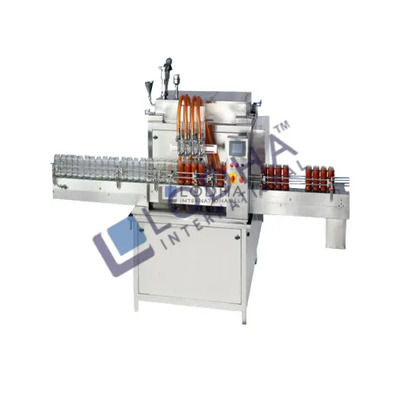
automatic liquid filling machine — use case: high-speed beverage bottling where throughput and minimal product shear are essential.
Gravity and overflow fillers
Gravity fillers work by letting product flow into containers naturally; overflow fillers create uniform fill levels for transparent containers used in cosmetics and edible oils.
Peristaltic & hygienic options
Peristaltic pumps are popular for sterile, shear-sensitive fluids: the fluid contacts only the tubing, simplifying cleaning and validation for pharma fill lines.
Key Features & Technical Specifications to Evaluate
Accuracy, speed, and changeover
When selecting equipment, balance fill accuracy (e.g., ±0.5% for high-value pharmaceuticals) against cycle speed. liquid filling machinery manufacturers typically list cycle rates (bottles per minute), dosing tolerances, and supported container sizes.
Construction materials and cleanability
Stainless steel 316L wetted parts, weld finishes, and CIP/SIP capability are vital for pharmaceutical and food applications. Machines designed for easy disassembly reduce downtime between batches.
Control systems and recipe management
Modern lines rely on PLC/HMI systems with recipe recall, remote diagnostics, and event logs. Recipe management speeds product changeovers and supports audit trails required during inspections.
Filling heads, nozzles, and anti-drip systems
Nozzle design matters: laminar flow nozzles reduce foaming in liquids; retractable nozzles prevent splashes in sterile rooms.
Industry-Specific Considerations
Food industry
Hygiene & food contact surfaces: Smooth finishes and drainage slopes to prevent microbial harborage.
Viscosity handling: Viscosities from water-like to pastes require modular pump options.
Filling speed: Beverage lines demand high throughput; condiment lines favor gentle handling.
Pharmaceutical industry
Sterility & validation: Machines must support validated sterilization cycles (CIP/SIP) and provide traceable batch records.
Regulatory compliance: Design, materials, and documentation must meet national and international GMP requirements.
Precision dosing: Injectable and ophthalmic products require minimal variance and validated leak-free closures.
Cosmetic industry
Gentle product handling: Avoid shear-sensitive degradation of creams and serums.
Aesthetic finishing: Precise headspace control and nozzle techniques for visual appeal.
Small-batch flexibility: Faster changeovers and scalable automation support product diversity.
Selecting a Supplier: Criteria & Red Flags
What to expect from a reliable supplier
Look for vendors that offer:
Clear machine specifications and real-world performance data.
On-site installation support, commissioning, and validation protocols.
Comprehensive spare-parts availability and training for operators.
Lodha International LLP positions itself as a practical supplier with a broad portfolio covering high-speed viscous fillers, servo pump-based systems, vial fillers, and monoblock filling-capping solutions.
Questions to ask during procurement
What is the machine’s validated accuracy across the expected viscosity range?
Can the supplier provide factory acceptance test (FAT) records?
What is typical spare parts lead time and local service response?
Common procurement pitfalls
Avoid vendors that lack documentation for traceability, do not provide FAT/SAT options, or cannot demonstrate hygienic design. Also be cautious of overstated cycle rates without verified performance metrics.
Integration, Automation & Turnkey Lines
From filler to finished pack
Liquid filling rarely stands alone: conveyors, capping, labeling, inspection, and packaging must be synchronized. Leading automatic liquid filling machine manufacturer in india suppliers provide full-line solutions and PLC integration.
Monoblock solutions and compact lines
Monoblock machines combine filling, capping, and sometimes labeling in a single frame — useful where footprint or controlled environments are constraints. automatic liquid filling machine monoblocks reduce transfer contamination risks and simplify utilities routing.
Industry 4.0 and data connectivity
Remote monitoring, OEE dashboards, and predictive maintenance add measurable uptime improvements. Choose systems with open protocols (OPC-UA, MQTT) for future-proofing.
Installation, Validation & After-Sales Support
Commissioning and validation for pharma
For pharmaceutical projects, commissioning should include IQ/OQ/PQ documentation and process validation protocols. Supplier support during validation is essential to meet regulatory inspections.
Training and maintenance
Operator and technician training increase run-time and reduce error-related waste. Contract options for preventive maintenance or spare-part kits help maintain throughput.
Global supply and export capabilities
If you plan to scale to international markets, partner with suppliers that act as an automatic liquid filling machine exporter with export experience, international packing standards, and export documentation. Lodha International LLP lists extensive export experience across continents and supports packaging lines for multiple industries.
Investment justification
A higher initial investment in a modular, electronically controlled automatic liquid filling machine often yields lower product giveaway, less rework, and faster product changeovers — translating to measurable ROI for medium-to-high-volume operations.
Why Choose Lodha International LLP
Lodha International LLP combines decades of specialized engineering for the pharmaceutical, food, and cosmetic industries with hands-on project delivery from pilot scale to full production lines. Their machines are engineered for hygienic operation, repeatable accuracy, and modular upgrades — with comprehensive commissioning, validation assistance, and global export experience. Choosing Lodha International LLP means partnering with a supplier that matches technical depth to practical plant-level needs while supporting long-term uptime and compliance.
Conclusion
Choosing the correct liquid filling technology is a strategic decision that shapes product quality, regulatory compliance, and operational costs. By matching machine type — volumetric, pump-based, peristaltic, or monoblock — to product properties and production goals, manufacturers in food, pharma, and cosmetics achieve measurable gains in accuracy and throughput. Prioritize suppliers that deliver documented performance, hygienic engineering, and solid after-sales support. Vendors with export experience and local manufacturing presence, such as Lodha International LLP, offer practical pathways from pilot production through validated, export-compliant lines. Thoughtful selection and diligent validation will convert equipment investment into consistent, market-ready products.
Ready to upgrade your production line? Call +91 9687731331 or email info@lodhapharma.com to discuss turnkey automatic liquid filling machine solutions with Lodha International LLP.


Comments